Rechercher dans ce blog

Sunday, January 31, 2021

Jordan Belfort, ‘Wolf of Wall Street,’ on ‘little guy’ stock wins: ‘It’s about time’ - Fox News

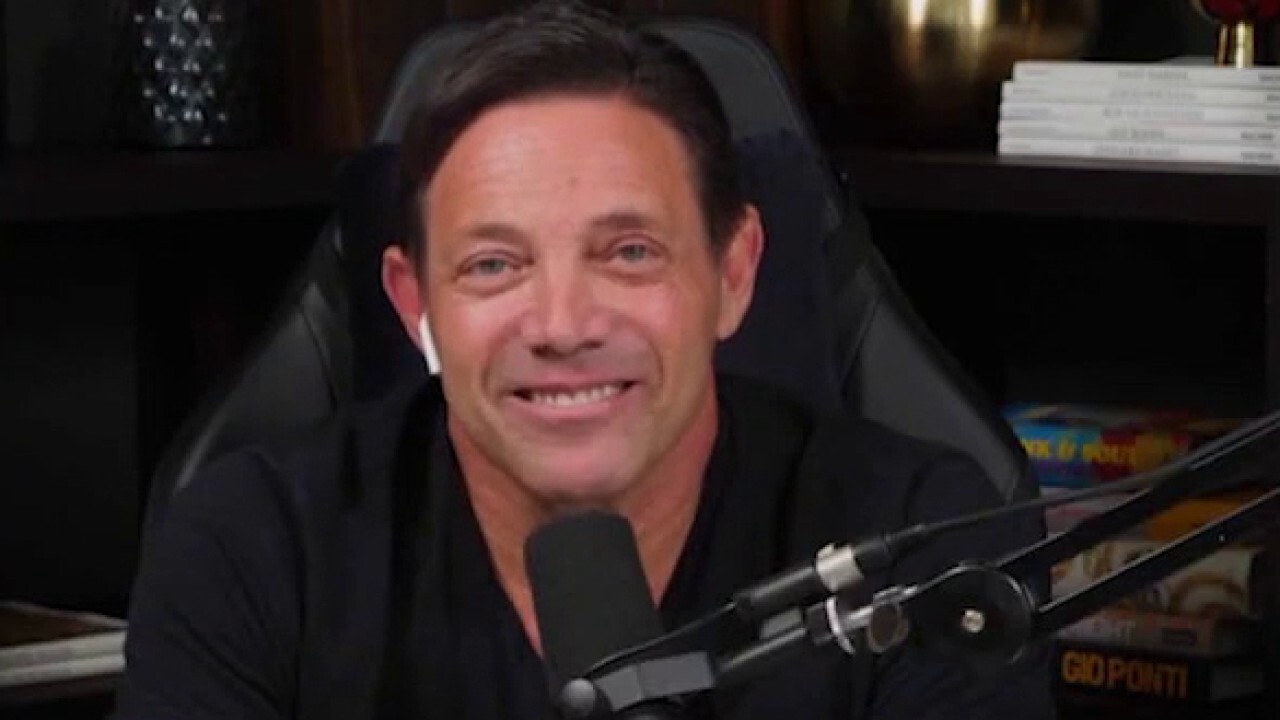
Jordan Belfort, the former stockbroker and convicted felon, weighed in Saturday night on last week’s GameStop-WallStreetBets-Robinhood saga.

Belfort, whose rise and fall on Wall Street was documented in the 2013 Martin Scorsese movie, "The Wolf of Wall Street," starring Leonardo DiCaprio, shared his observations during an appearance on Fox News’ "Watters' World," with host Jesse Watters.

Watters asserted that moves by Wall Street giants to convince retail trading platforms like Robinhood to halt trading on puny stocks like GameStop -- that "average Joe" investors had sent soaring via the Reddit community WallStreetBets-- was likely illegal.

"I think it goes beyond that," Belfort agreed – and warned the implications could be fatal for Robinhood.

DEFIANT REDDITORS BUY TIMES SQUARE BILLBOARD AS GAMESTOP STOCK SAGA RAGES

"When I first saw it happen … when I really investigated what happened," he said, "they broke a tremendous amount of laws …

"I think Robinhood’s out of business because the amount of lawsuits they’re gonna get right now, from every single person on both sides of it … They’ll say, ‘Wait, I couldn’t buy what I wanted to buy,’ or ‘I was forced to sell’ -- They’re done, Robinhood."

"Someone needs to go to jail, it’s true," he continued. "At first I wasn’t that upset but last night I saw that the shorts were still short and … It’s about time that the little guy gave it to Wall Street. It’s so gratifying to see. I’m still in shock of it actually happening."

"It’s about time that the little guy gave it to Wall Street. It’s so gratifying to see."

— Jordan Belfort

Watters then asserted that Wall Street pros had been served a dose of their own medicine and didn’t like it – and retaliated by moving to "crush" the "little guy" investors who made some money.

Belfort again agreed, noting how quickly the retail trading platforms had been shut down.

"They shut down these platforms for the little guy like the way Parler got shut down," he said, comparing the situation to that of a social media site that was popular with conservatives.

"Now, how about this one?" Belfort continued. "Google eliminated 100,000 negative reviews off of Robinhood. … I can’t believe the things that are being allowed to happen right now and it’s almost like Big Tech has impunity, Wall Street has had impunity."

"I can’t believe the things that are being allowed to happen right now and it’s almost like Big Tech has impunity, Wall Street has had impunity."

— Jordan Belfort

Regardless of how things play out in the days and weeks ahead, Belfort issued a clear warning to any novice investors who may be thinking about trying to make some fast cash.

CLICK HERE TO GET THE FOX NEWS APP

"Please be careful," he cautioned, "because at a certain point in time the party’s gonna end for these stocks and they’re gonna drop precipitously -- and unless you’re careful you’re gonna lose a ton of money."

He added one last observation as well.

"Until someone goes to jail for this," he said of last week’s market maneuvers, "it’s gonna keep happening again and again."

Let's block ads! (Why?)


"street" - Google News
January 31, 2021 at 01:20PM
https://ift.tt/3adQYtq

Jordan Belfort, ‘Wolf of Wall Street,’ on ‘little guy’ stock wins: ‘It’s about time’ - Fox News
"street" - Google News
https://ift.tt/2Ql4mmJ
Shoes Man Tutorial
Pos News Update
Meme Update
Korean Entertainment News
Japan News Update

Saturday, January 30, 2021

Revamped 'ESP' on King Street Ditches Old Ownership and Controversies - ALXnow

Erik Muendel wants the new ESP Tea and Coffee to be what the old Killer E.S.P. should have been.

The coffee shop at 1012 King Street was a beloved, hip hangout spot in Old Town featuring sorbet, pie and espresso, that latter from which the bistro derived its name. Behind the scenes, however, its controversial owner Rob Shelton clashed with staff who alleged inappropriate behavior toward women and minors working at the shop. The conflict culminated with the entire staff quitting in early 2020 followed by the replacement staff quitting just months later.

Muendel, a local tech entrepreneur, was one of those customers who was a fan of the coffee shop but was disheartened by last year’s revelations. He’s taken over the space and the equipment and looks to reopen to the public on Monday, Feb. 1.

“There was a little fanbase, myself included, so that’s why I got involved,” Muendel said.

Landlord Ian McGrath confirmed that Shelton has left the business entirely, and said that the shop will maintain its boho vibe.

Now, Muendel said the challenge is to create the kind of coffee shop those who were regulars at the old place wanted it to be. It starts with a minor name change.

“I worked with the name to get something that was familiar but different,” Muendel said. “It was something I loved when I first started going there; I thought it was a cool name before I realized it stood for ‘espresso, sorbet, and pie.'”

The new name is ESP Tea and Coffee with a third-eye motif to represent paranormal “extrasensory perception.”

“I personally have a passion for tea,” said Muendel. “I loved the selection at Killer E.S.P. but I specialize in a special kind of tea from the Hunan Province of China called Pu-erh.”

Pu-erh, as Muendel explains it, is a type of fermented tea that comes in a cake form rather than loose leafs. ESP will be an exclusive provider of Pu-erh tea in the region, selling both the cakes and offering mini-cakes for single servings. Like wine, Muendel said Pu-erh is aged and fermented, with a bold taste and varying notes of flavor.

“It’s very high end, very exclusive, and there’s no shop in the Metro area that sells it,” Muendel said.

Almost nowhere: Blueduck Tavern in D.C. (1201 24th Street NW) also has pu-erh tea on the menu, as does Ching Ching Cha — as of 2018 at least..

The old Killer E.S.P. tea selection will be narrowed down to around 30 loose leaf teas and six Pu-erh options.

Along with the rebooted tea selection comes a return of some of the old staff.

“I was a long time customer and I got to know many of the managers and baristas over the years,” Muendel said. “[Contacting them] was one of the first things I wanted to do. I’ve run several small businesses in Old Town but I’ve never done restaurant/retail. It’s a new space for me, so it was important to get connected with past employees in the leadership position.”

Two former Killer E.S.P employees will work as the new general and assistant manager.

“I’ve put a lot of trust in them and am learning a lot from them,” Muendel said.

Muendel is planning to do a soft opening for the new cafe starting on Monday, Feb. 1.

“I’m excited to reconnect with the community,” Muendel said. “I’ve kept the core interior pretty similar, so it will be pretty familiar. It will almost feel like a parallel dimension, familiar but different and cool.”

Let's block ads! (Why?)


"street" - Google News
January 30, 2021 at 02:45AM
https://ift.tt/3owNZl5

Revamped 'ESP' on King Street Ditches Old Ownership and Controversies - ALXnow
"street" - Google News
https://ift.tt/2Ql4mmJ
Shoes Man Tutorial
Pos News Update
Meme Update
Korean Entertainment News
Japan News Update

'Street Gang: How We Got to Sesame Street': Film Review | Sundance 2021 - Hollywood Reporter

Director Marilyn Agrelo traces the first two decades of 'Sesame Street' in a feature-length documentary that will air on HBO.

It never fails: Every few months Sesame Street does something progressive — introducing an autistic character, acknowledging COVID-19 as a serious issue, teaching empathy — and a certain subset of social media is up in arms about how their beloved childhood favorite has "gone woke," or something. It's in those moments that I like to post the 1972 clip of Jesse Jackson, then boasting an afro and a shiny medallion around his neck, leading a diverse group of children in a call-and-response recitation of "I Am — Somebody."

The Jesse Jackson clip features prominently in Marilyn Agrelo's Street Gang: How We Got to Sesame Street, a very solid if somewhat tip-of-the-iceberg documentary premiering at Sundance ahead of a spring theatrical launch and HBO premiere.

It would be fair to feel like this is a topic that has received adequate retrospective treatment over the years, including in Being Elmo: A Puppeteer's Journey, a Sundance sensation a decade ago, and the similarly puppet-centric doc Muppet Guys Talking, directed by Frank Oz. In retrospect, those films fit in nicely as complementary pieces to Agrelo's doc, which takes Michael Davis' bestseller of the same name as its inspiration. Street Gang: How We Got to Sesame Street is designed as an overview, specifically an overview of the first two decades of Sesame Street, one that invites rather than precludes more focused examinations in the future.

Buoyed to a tremendous degree by the participation of series creators Joan Ganz Cooney and Lloyd Morrisett, spry legends in their 90s, Street Gang traces the earliest origins of the Children's Television Workshop and the then-revolutionary aspirations to use television — and specifically the visual language of commercial television — as a teaching tool for kids. But let's be more precise than that, because the initial goal was to use this nascent show as a teaching tool for inner-city kids — and namely, minority kids. There was never a second in the history of the beloved show in which progressive values and diverse, ideological message-building weren't the absolute core building blocks of its DNA.

In somewhat dry, but still fascinating step-by-step fashion, the documentary explains how myriad crucial elements came together, from unsung heroes like Sharon Lerner, the show's initial research and curriculum coordinator, to amply sung heroes like Jim Henson, represented here by Lisa and Brian Henson. Many key behind-the-scenes figures are alive and eager to tell their stories — folks like longtime head writer Norman Stiles or musical parody savant Christopher Cerf — but others have passed on, so Agrelo makes sure to feature two of legendary director Jon Stone's daughters (one of whom even appeared on the show as a wee child) and memories from Nick Raposo, son of series composer Joe Raposo. Henson, Stone and Raposo are also featured in a wealth of behind-the-scenes footage and period interviews, consistently enlightening and in some instances utterly hilarious.

The in-front-of-the-camera team is fully represented as well. The era of Sesame Street depicted in Street Gang is my generation's sweet spot, and it's hard to imagine any viewer of a certain age not literally clapping for interviews with actors like Sonia "Maria" Manzano, Emilio "Luis" Delgado and Bob "Bob" McGrath. Caroll Spinney was interviewed before his death in 2019 and tracks key pieces of Big Bird's development, and there are great stories from Fran Brill, who answered Henson's initial call for female puppeteers when it became clear that having an all-male group manipulating the various synthetic characters wouldn't fly.

The first half of the doc is methodical and lacking in any sort of formal whimsy, which, given the subject matter, certainly would have been organic. Agrelo lets the interview subjects cover the information and the clips — which are triggering in the best way possible if you were raised on the show — deliver the energy. I wasn't always sure as to the rhyme or reason for which certain details get explored and others skipped over. The vintage sketch with puppet executives debating possible titles for the show or the clip with Kermit's explanation for the title feel new, but it's slightly odd that the theme song and opening credits go completely unaddressed.

I'm sure the filmmakers know as well as anybody that this material could just as easily have filled a longform miniseries in this media landscape. You have to anticipate and accept that for every one of your questions that gets answered here — for every breakdown of Big Bird's journey from ungainly dumb sidekick to lovable, childlike centerpiece — there are at least twice as many questions that go unexplored and characters whose arcs go untraced.

The approach of the first half is bloodless enough that I wondered if Street Gang would hit my tear ducts at all. I need not have worried. The home stretch is one gut-punch after another, especially with the one-two combination of the deaths of Mr. Hooper and Jim Henson. So don't fret if you think Street Gang is being too analytical, because the sobbing will come. And it isn't just sadness. Agrelo smartly saved a lot of the funniest outtakes and most happily emotional sequences, like the montage of small kids interacting with the various puppets, for the last 30 minutes as well.

If 107 minutes is maybe insufficient for something as important and layered as Sesame Street, that likely won't keep viewers from being satisfied. They'll just have to make a few more documentaries about this seminal show.

Venue: Sundance Film Festival (Premieres)
Production Companys: HBO Documentary Films, Screen Media
Director: Marilyn Agrelo
Producers: Trevor Crafts, Ellen Scherer Crafts, Lisa Diamond
Executive producers: Seth Needle, Mike Messina, David Nagelberg, Brian O'Shea, Nat McCormick, Matthew Helderman, Luke Taylor, Mark Myers, Heather Kenyon, Nancy Abraham, Lisa Heller
Cinematographer: Luke Geissbühler
Editor: Ben Gold
107 minutes

Let's block ads! (Why?)


"street" - Google News
January 31, 2021 at 02:00AM
https://ift.tt/3agNNRG

'Street Gang: How We Got to Sesame Street': Film Review | Sundance 2021 - Hollywood Reporter
"street" - Google News
https://ift.tt/2Ql4mmJ
Shoes Man Tutorial
Pos News Update
Meme Update
Korean Entertainment News
Japan News Update

GameStop Mania Is Delivering a Dangerous Rush to the Reddit Mob - Bloomberg

[unable to retrieve full-text content]

GameStop Mania Is Delivering a Dangerous Rush to the Reddit Mob  Bloomberg

"street" - Google News
January 30, 2021 at 07:30PM
https://ift.tt/3j3nti8

GameStop Mania Is Delivering a Dangerous Rush to the Reddit Mob - Bloomberg
"street" - Google News
https://ift.tt/2Ql4mmJ
Shoes Man Tutorial
Pos News Update
Meme Update
Korean Entertainment News
Japan News Update

'Three generations lost': Vigil held for victims of Adams Street mass shooting - IndyStar

After a wild week of stocks, you can’t stream most of the biggest Wall Street films - The Verge

It has been a wild week for the stock market, with amateur traders from Reddit’s r/WallStreetBets subreddit battling traditional investors. The past several days have been full of massive swings in stocks like GameStop and AMC and app-fueled drama that’s sparked a larger debate over the nature of Wall Street as a whole.

But if you were hoping to kick back this weekend, relax, and enjoy a classic business movie about shark-like investors and over-confident Wall Street executives, you’re probably out of luck. Nearly every major finance film isn’t available to stream right now in the US (at least, not at the time of publication of this article), thanks to the capricious nature of the streaming marketplace, the increasingly fragmented libraries of studios, and the byzantine licensing deals that regulate what you can stream and where.

This week’s short stock drama have you hankering for The Big Short? You won’t find it on Netflix, Hulu, or HBO Max. Right now, you can stream it with ads on Crackle, of all services. Paramount (which distributed the film) might be saving it for Paramount Plus, which is set to launch in March, but that won’t do you any good this weekend. Instead, your only option is to buy or rent it — which, it seems, many people are doing, given that the film has shot to the No. 3 spot on iTunes.

Maybe the ups and downs of the stock market reminded you more of Martin Scorsese’s The Wolf of Wall Street, chronicling the rise and fall of investor Jordan Belfort. But the Paramount film is nowhere to be found on any streaming platform. So unless you’re willing to pony up some actual cash to buy or rent the film (which, like The Big Short, is shooting up rental charts), you won’t be enjoying Leonardo DiCaprio’s profanity-fueled chest-thumping either. The same applies to 2000’s Boiler Room, which is also absent from any streaming service.

The Big Short

20th Century Fox’s Wall Street is — predictably — not on Disney Plus to stream, but it’s also not available on Hulu or any other service. If you are looking for a financial film to watch this weekend, though, the sequel, Wall Street: Money Never Sleeps, is on Amazon Prime. There’s also Margin Call, which is streaming on Peacock (for now).

But the dearth of classic Wall Street films isn’t a unique issue. It’s one that streaming services have been grappling with in recent years, as big players like Netflix and Hulu have been less encompassing and streaming services have focused more on building up libraries of original content. There was a similar issue during the early days of the COVID-19 pandemic, when millions of viewers looking to watch Steven Soderbergh’s 2011 film Contagion were frustrated that the film wasn’t available to stream anywhere.

The fact that iconic Wall Street films will similarly miss the big moment around ambitious investors and skeevy short selling is indicative of a bigger problem with streaming in 2021, one that will likely continue to get worse as more and more studios continue to reclaim their content for their own services.

Then again, it’s almost fitting that the only way to watch The Wolf of Wall Street or The Big Short this weekend is to pay a little extra cash back into the big financial machine.

Let's block ads! (Why?)


"street" - Google News
January 31, 2021 at 01:30AM
https://ift.tt/3cpkbUN

After a wild week of stocks, you can’t stream most of the biggest Wall Street films - The Verge
"street" - Google News
https://ift.tt/2Ql4mmJ
Shoes Man Tutorial
Pos News Update
Meme Update
Korean Entertainment News
Japan News Update

The Silicon Valley Start-Up That Caused Wall Street Chaos - The New York Times

Robinhood pitched itself to investors as the antithesis of Wall Street. It didn’t say that it also entirely relies on Wall Street. This past week, the two realities collided.

The online trading app Robinhood became a cultural phenomenon and a Silicon Valley darling with a promise to wrest the stock market away from Wall Street’s traditional gatekeepers and “let the people trade” — making it as easy to put millions of dollars at risk as it is to summon an Uber.

This past week, in the middle of a market frenzy pitting amateur traders against hedge fund bigwigs, that veneer began to chip. As it turned out, Robinhood was at the mercy of the very industry it had vowed to upend.

The frenzy morphed into a crisis when legions of armchair investors on Robinhood, who had been buying up options and shares of GameStop, a video game retailer, enlarged those bets and also began making big trades in other stocks, including AMC Entertainment.

As the trading mania grew, the financial system’s risk reduction mechanisms — managed by obscure entities at the center of the stock market called clearinghouses — kicked in on Thursday, forcing Robinhood to find emergency cash to continue to be able to trade. It had to stop customers from buying a number of heavily traded stocks and draw on a more than $500 million bank line of credit. On Thursday night, the company also took an emergency infusion of more than $1 billion from its existing investors.

A high-flying start-up suddenly looked a lot like an overwhelmed, creaky company.

“From a marketing standpoint they position themselves as new, innovative, cool,” said Peter Weiler, the co-chief executive of the brokerage and trading firm Abel Noser. “What I think everyone is missing is, when you peel the onion back they are just a heavily regulated business.”

Robinhood’s distress follows a familiar narrative: A Silicon Valley company that promised to disrupt an industry ends up being overcome by the forces it unleashed and has to be reined in by regulators, or in this case, the industry it promised to change. Its arc is not all that different from Facebook and Google, which changed the ways in which billions of people socialize and search for information, but are now caught in the cross hairs of lawmakers and an angry public.

“They were trying to change the rules of the road without understanding how the road was paved and without any respect for the existing guard rails,” said Chris Nagy, a former trading executive at TD Ameritrade and the co-founder of the Healthy Markets Association, a nonprofit that seeks to educate market participants. “It ended up creating risk for their customers and systemic risk for the market more broadly.”

The fiasco will almost certainly have consequences for the company. The Securities and Exchange Commission said on Friday that it would closely review any actions that may “disadvantage investors or otherwise unduly inhibit their ability to trade certain securities.” Lawmakers on both sides of the aisle called for hearings over complaints that customers were shut out of trades.

After Robinhood limited some trading on Thursday and the price of the stock plunged, furious users flooded online app stores with vitriolic reviews, with some accusing Robinhood of doing the bidding of Wall Street. Others sued the company for the losses they sustained. Robinhood’s continuing vulnerability, even after raising $1 billion, became clear on Friday when it restricted trading in more than 50 stocks.

“It was not because we wanted to stop people from buying these stocks,” Robinhood said in a blog post on Friday night. Rather, the start-up said, it restricted buying in volatile stocks so that it could “comfortably” meet deposit requirements imposed by its clearinghouses, which it noted had increased tenfold during the week.

None of this seems to be slowing down its growth. Even as Robinhood’s actions angered existing customers, it was winning new ones. The app was downloaded more than 177,000 times on Thursday, twice the daily download rate over the previous week, according to Apptopia, a data provider, and it had 2.7 million daily active users on its mobile app that day, its highest ever. That’s more than its rivals — Schwab, TD Ameritrade, E*Trade, Fidelity and Webull — combined.

The Robinhood app.
Amy Lombard for The New York Times

Controversy is not new for Robinhood.

The two Stanford classmates who created the company in 2013 said from the beginning that their focus was on “democratizing finance” by making trading available to anyone. To do so, the Menlo Park, Calif., company has repeatedly employed a classic Silicon Valley formula of user-friendly software, brash marketing and a disregard for existing rules and institutions.

Online brokers had traditionally charged around $10 for every trade, but Robinhood said that customers of its phone app could trade for free. The move drew in hordes of young investors.

In building its business, the company disregarded academic research showing how frequent, frictionless trading generally does not lead to good financial outcomes for investors. The risks to customers became clear last summer when a 20-year-old college student’s suicide note blamed a six-figure trading loss for his death.

Robinhood also popularized options trading among novices. An option is generally cheaper than buying a stock outright, but has the potential to lead to much bigger and faster gains and losses, which is why regulators and brokers have traditionally restricted trading in these financial contracts to more sophisticated traders.

Robinhood’s marketing, meanwhile, papered over the fact that its business model, and the free trading, were paid for by selling customer’s orders to Wall Street firms in a system known as “payment for order flow.” Big trading firms like Citadel Securities and Virtu Financial give Robinhood a small fee each time they buy or sell for its customers, typically a fraction of a penny per share. These trading firms make money, in turn, by pocketing the difference, known as the “spread,” between the buy and sell price on any given stock trade, and the more trades they handle, the greater their potential revenue. Many other online brokers rely on a similar system, but Robinhood has negotiated to collect significantly more for each trade than other online brokers, The Times has found.

The mismatch between Robinhood’s marketing and the underlying mechanics led to a $65 million fine from the S.E.C. last month. The agency said that Robinhood had misled customers about how it was paid by Wall Street firms for passing along customer trades.

Robinhood has also run afoul of regulators as it rushed to release new products. In December 2018, the company said it would offer a checking and savings account that would be insured by the Securities Investor Protection Corporation, or S.I.P.C., which protects investors when a brokerage firm fails.

But S.I.P.C.’s then-chief executive said he hadn’t heard about Robinhood’s plan, and he pointed out that the S.I.P.C. doesn’t protect plain-vanilla savings accounts — that would be the job of the Federal Deposit Insurance Corporation. It took almost a year for Robinhood to reintroduce the product, saying in a blog post that it “made mistakes” with its earlier announcement.

“They went in trying to make big splashes and they often had to get reeled back in,” said Scott Smith, a brokerage analyst at the financial firm Cerulli Associates.

Gabriela Bhaskar for The New York Times

Robinhood’s ambitions and amateurism collided in recent weeks as small investors, many of them on a mission to challenge the dominance of Wall Street, used its free trades to push up the stock of GameStop and other companies. Rampant speculation on options contracts helped drive the rise of GameStop’s shares from about $20 on Jan. 12 to nearly $500 on Thursday — a rally that forced Robinhood to hit the brakes on its own customers.

One institution that tripped up Robinhood this past week is a clearinghouse called the Depository Trust & Clearing Corporation. Owned by its member financial institutions including Robinhood, the D.T.C.C. clears and settles most stock trading, essentially making sure that the money and the shares end up in the right hands. (Options trades are cleared by another entity.)

But the D.T.C.C.’s role is more than just clerical. Clearinghouses are supposed to help insulate a particular market from extreme risks, by making sure that if a single financial player goes broke, it doesn’t create contagion. To do its job, the D.T.C.C. requires its members to keep a cushion of cash that can be put toward stabilizing the system if needed. And when stocks are swinging wildly or there’s a flurry of trading, the size of the cushion it demands from each member — known as a margin call — can grow on short notice.

That’s what happened on Thursday morning. The D.T.C.C. notified its member firms that the total cushion, which was then $26 billion, needed to grow to $33.5 billion — within hours. Because Robinhood customers were responsible for so much trading, they were responsible for footing a significant portion of the bill.

The D.T.C.C.’s demand is not negotiable. A firm that can’t meet its margin call is effectively out of the stock trading business because D.T.C.C. won’t clear its trades any more. “If you can’t clear a trade, you can’t trade a trade,” said Robert Greifeld, the former chief executive of Nasdaq and current chairman of Virtu Financial. “You’re off the island. You’re banished.”

For veteran players like Citadel Securities and JPMorgan Chase, generating additional hundreds of millions of dollars on short notice was not a problem. But for a start-up like Robinhood, it was a mad scramble.

While it cobbled together the needed cash from its credit line and investors, Robinhood limited customers from buying GameStop, AMC and other shares. Allowing its investors to sell these volatile stocks — but not buy them — reduced its risk level and helped it meet requirements for additional cash, Robinhood said in its blog post.

Ultimately, the company succeeded in pulling together roughly $1 billion from some of its existing investors, including the venture firms Sequoia Capital and Ribbit Capital. As a sweetener, Robinhood issued special shares to those investors that will give them a better deal when the company goes public, as early as this year.

But the quick deal left more than one observer scratching their heads.

“How does an online broker find itself in need of an overnight infusion of a billion dollars?” asked Roger McNamee, a longtime investor who co-founded the private-equity firm Elevation Partners. “There’s something about this that says somebody is really scared about what’s going on.”

Let's block ads! (Why?)


"street" - Google News
January 30, 2021 at 11:38PM
https://ift.tt/2L3c2u1

The Silicon Valley Start-Up That Caused Wall Street Chaos - The New York Times
"street" - Google News
https://ift.tt/2Ql4mmJ
Shoes Man Tutorial
Pos News Update
Meme Update
Korean Entertainment News
Japan News Update

Search

Featured Post

5 Negara yang Terkenal akan Street Food Nikmat Mereka - IDN Times

Berwisata ke luar negeri tak lengkap rasanya jika tidak mencoba berbagai hal yang khas dari negara tersebut. Mulai dari tempat wisata , b...

Postingan Populer